
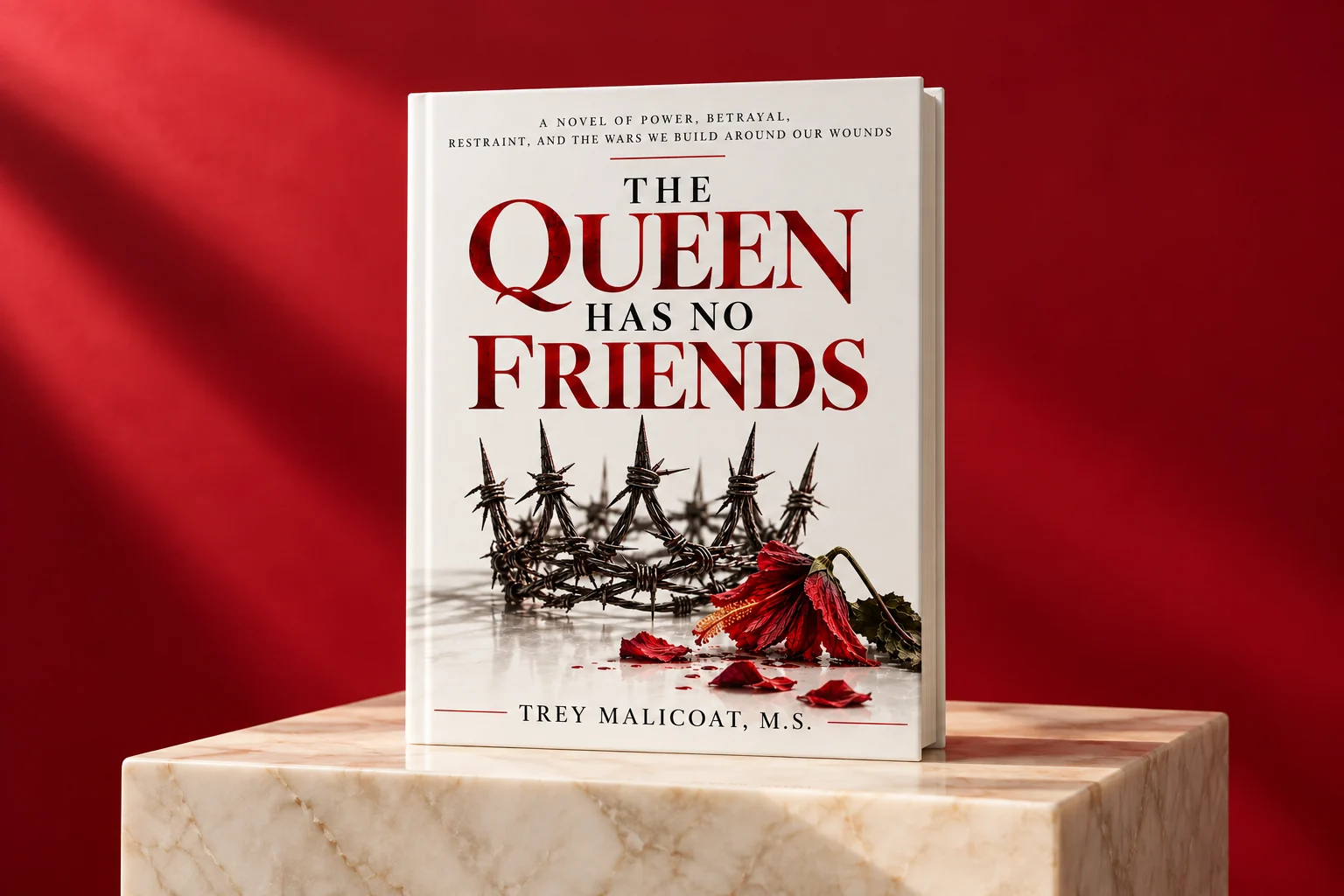
There is a kind of loneliness that power cannot protect you from.
You can be surrounded by people and lose the ability to let anyone close. You can have the final word in every conversation and no longer hear what someone is trying to tell you. You can keep your place at the center of everything while the relationships around you become smaller, quieter, and more afraid.
That is a loneliness I wanted us to be willing to look at in The Queen Has No Friends.
I wrote this book because the consequences of fear do not stay inside the person who feels it. They enter our conversations. They shape what we permit others to say. They influence the decisions we call necessary and the distance we insist is reasonable.
Eventually, other people begin arranging themselves around what we have not faced.
The story is personal.
This book grew out of a painful business experience and the questions it left with me. Questions about trust, power, betrayal, and the need to remain in control. Questions about what happens when the work of building something together becomes tangled with the fear of becoming less necessary.
Writing gave me a way to sit with those questions. It also required me to consider my own response to pain.
When someone hurts us, the injury can become the explanation we carry into every room. We can become so devoted to proving what happened that we stop asking what our response is doing to us. The desire to be understood can harden into the demand to be vindicated.
I wanted the story to hold that difficult moment: the point where we have been wounded and still have choices to make.
What will we do with our hurt? What will we ask other people to carry? Who will we become while trying to feel safe again?
A crown can become a lonely place.
The title names a consequence that deserves our attention. When people feel they must protect a leader from discomfort, honesty becomes expensive. A concern stays unspoken. An apology arrives without conviction. Someone agrees because disagreement feels too costly.
From the center, this can look like loyalty.
For the people around it, the relationship may feel increasingly difficult to inhabit.
I care about that difference. Families experience it. Partnerships experience it. Businesses experience it. A relationship can remain functional long after it has stopped feeling safe enough for truth.
The queen gives us enough distance to look at this pattern. A story can let us approach something we might immediately defend against if someone named it directly in our own lives.
Understanding asks something of us.
Understanding how fear shapes behavior does not remove our responsibility for the harm we cause. It gives us something more useful to work with than blame alone.
We can begin to notice the moment we tighten our grip. The urge to punish someone for becoming more independent. The temptation to mistake a boundary for rejection. The need to win a conversation when what we actually want is reassurance that we still matter.
Those moments are human. What we do next matters.
We can ask a more honest question. We can stop a conversation before we turn it into a weapon. We can acknowledge what we have done without making our pain the reason someone else must accept it.
Repair requires that kind of courage. So does recognizing when a relationship needs a boundary that love alone cannot supply.
Why this belongs in a conversation about business.
Businesses change through decisions made by people. Those people bring their histories, loyalties, fears, and hopes into the room.
As technology changes what work requires from us, some of the roles we have relied on for identity will change too. A person who has always been needed for a particular task may struggle to imagine another way to contribute. A leader may experience a more capable team as a threat to their place.
We need to be able to talk about that without humiliating anyone. We also need to recognize when someone’s attempt to feel secure is making everyone else less secure.
That is why I bring this story into my work with leaders and audiences. I want us to recognize these choices while we still have the opportunity to make them differently. To build relationships that can hold truth. To lead without asking everyone around us to become smaller.
What I hope you carry from it.
I hope you find a moment in this book that stays with you. Perhaps it helps you recognize a relationship you have struggled to understand. Perhaps it asks you to look more carefully at a choice of your own.
I hope it makes room for tenderness without asking you to abandon your judgment. I hope it gives you language for something you have felt but could not yet name.
Most of all, I hope it reminds you that pain does not have to become the organizing principle of your life.
What hurt you matters. The person you choose to become matters too.